



Sahar Mansha, the author of this article, is a PhD scholar and agriculture professional with a background in Plant Pathology and experience in the Agritech sector. She has worked in business development, and digital agriculture, with a particular interest in sustainable development. She can be reached at Linkedin
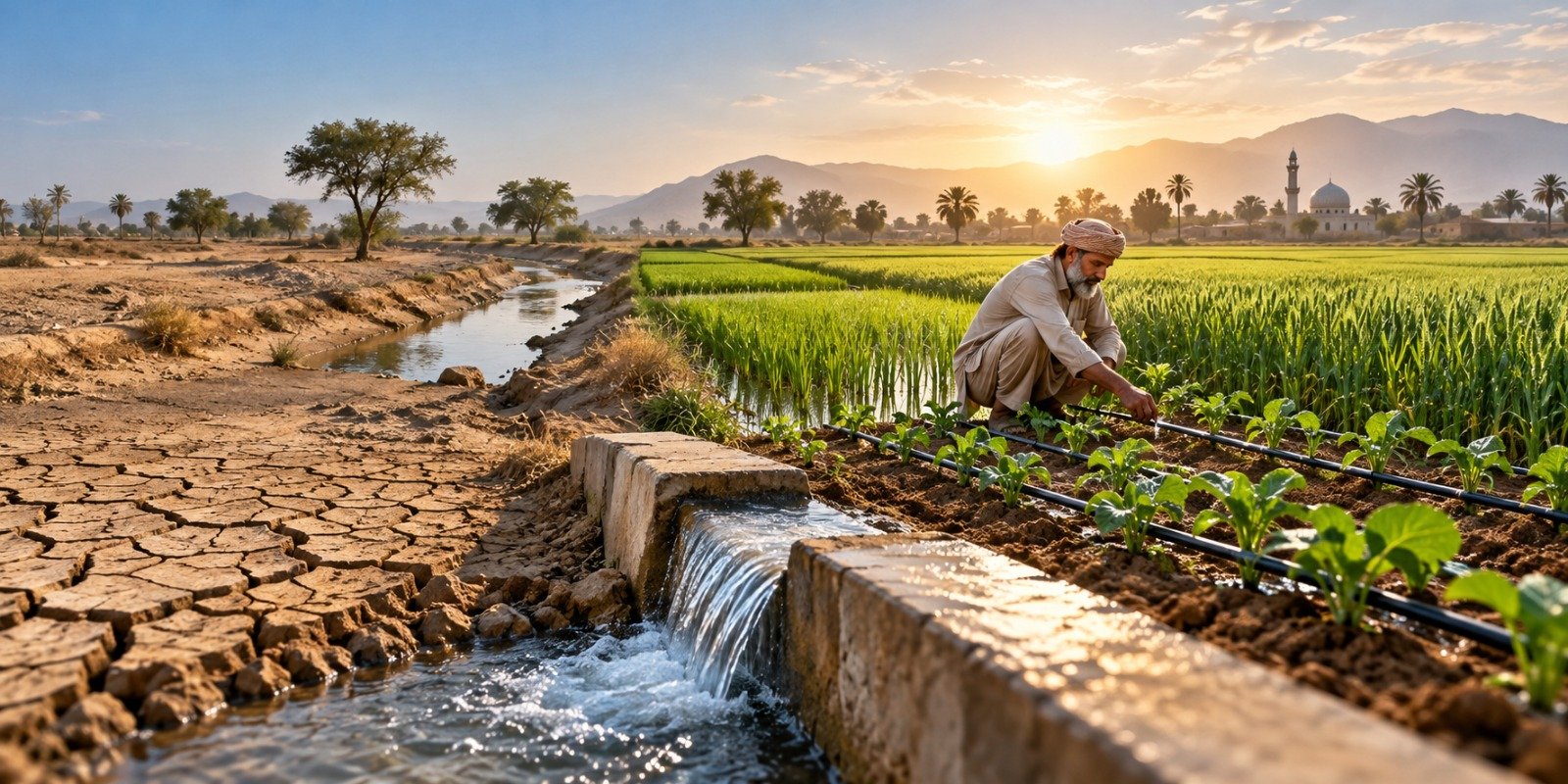
Pakistan’s agriculture depends heavily on irrigation, but the challenge is not simply having enough water; it is ensuring the right water reaches the right crop at the right time. Water shortages, inefficient irrigation, groundwater depletion and climate variability are increasingly affecting crop growth and productivity.
The Real Cost of Inefficient Irrigation
Traditional flood irrigation remains widely used and it can result in both over-irrigation and under-irrigation. Groundwater has become an important source for farmers, particularly where canal supplies are insufficient. However, the World Bank reports that groundwater provides more than 50% of agricultural water in Pakistan, making sustainable groundwater management increasingly important. Waterlogging and salinity create another challenge.
Water at the Right Time
Water shortages during germination, vegetative growth, flowering or grain filling can significantly affect crop development and final yield.
The objective should therefore be:
Right Crop → Right Amount → Right Time → Right Place
From Water Consumption to Water Productivity
The future of irrigation should focus on water productivity rather than simply water consumption.
- Punjab: Water stress affects wheat, rice, cotton and sugarcane, especially during critical growth stages. FAO is assessing water productivity and irrigation efficiency in Bahawalnagar and Bahawalpur.
- Sindh: High temperatures, variable water availability and irrigation challenges increase crop water stress.
- Balochistan: Limited rainfall and groundwater dependence make water scarcity a major constraint; efficient irrigation, storage and karez rehabilitation are important.
- Khyber Pakhtunkhwa: Irregular rainfall, localized water shortages and flood risks create significant water-management challenges for agriculture.
These differences highlight the need for province-specific water management rather than a one-size-fits-all approach.
Technology Can Make Every Drop Count
Satellite imagery, remote sensing, weather data, soil-moisture monitoring and Artificial Intelligence (AI) can help identify crop stress, estimate water requirements and support more precise irrigation decisions. FAO’s WaPOR platform uses satellite-derived data to monitor agricultural water productivity. Pakistan has also been developing drought-monitoring capabilities using WaPOR data, including the Pakistan Drought Management System (PakDMS) for near-real-time drought monitoring and early warning.
The Road Ahead
Water scarcity → Better data → Smarter irrigation → Higher water productivity → Greater food security
Conclusion
Pakistan’s agricultural future will depend not only on securing more water, but on making every available drop more productive. Water-smart agriculture represents a new chapter for Pakistan’s farming future. When water is managed at the right time, in the right quantity, and for the right crop stage, farmers can improve productivity, reduce losses, and use limited water resources more sustainably.
Prestigian Global highlights these emerging agricultural trends to provide readers with insights into how smart irrigation, data, and technology are transforming water management and strengthening agriculture in Pakistan.